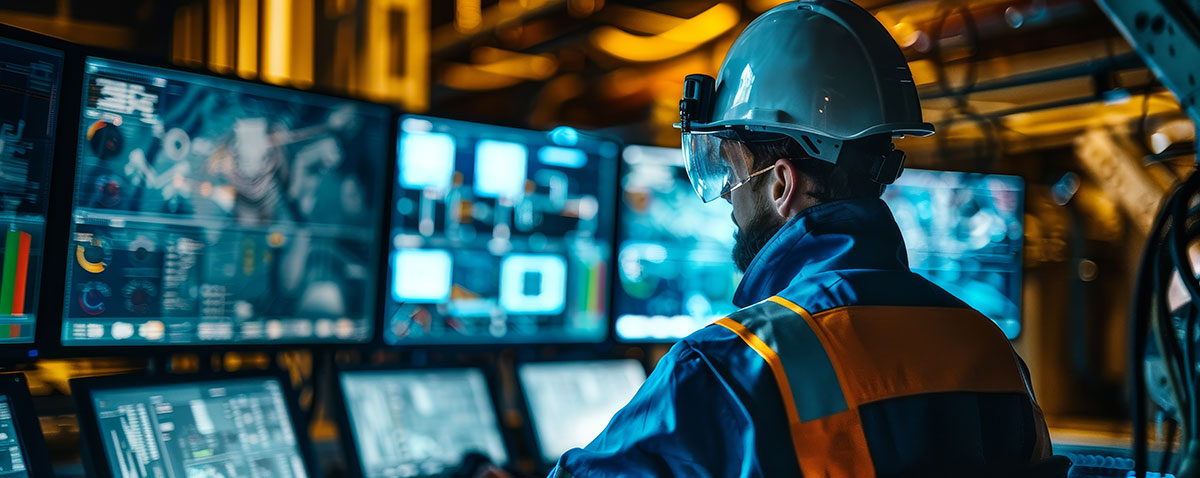
Mining Is Entering a New Era
Mining has always been a demanding industry. It requires strong planning, disciplined operations, and a deep understanding of the land. For many years the core principles of mining remained the same. Exploration, extraction, and processing followed well established methods.
Today the industry is changing. Technology is transforming how mining companies operate. Digital tools, data systems, and automation are improving efficiency and safety in ways that were not possible before.
From my perspective, innovation is not replacing the fundamentals of mining. It is strengthening them. Technology allows companies to make better decisions, protect workers, and manage resources more responsibly.
Data Is Becoming One of Mining’s Most Valuable Resources
In the past, mining decisions often relied on experience and physical surveys alone. While those methods remain important, modern mining operations now rely heavily on data.
Digital mapping tools allow geologists to analyze mineral deposits with greater accuracy. Advanced modeling systems help predict how a resource body will behave during extraction. Real time monitoring allows operators to see how equipment and production processes are performing.
Access to reliable data improves decision making across every stage of the operation. Exploration becomes more targeted. Production becomes more efficient. Costs become easier to control.
Data does not remove uncertainty entirely, but it significantly reduces guesswork.
Digital Systems Improve Operational Efficiency
Mining operations involve many moving parts. Equipment must run reliably. Production schedules must stay on track. Supply chains must function smoothly.
Digital management systems help coordinate these activities. Modern software platforms allow operators to monitor equipment performance, track production metrics, and manage maintenance schedules.
When equipment performance is monitored in real time, problems can be identified early. Maintenance can be scheduled before major failures occur. This reduces downtime and keeps production consistent.
Operational efficiency improves when information flows clearly through the organization.
Automation Is Reducing Risk in Dangerous Environments
Mining environments can be physically demanding and sometimes dangerous. Automation is helping reduce exposure to these risks.
Automated drilling systems, remote operated equipment, and advanced monitoring tools allow certain tasks to be performed from safe distances. Workers no longer need to remain in hazardous areas for extended periods.
Automation also improves precision. Machines can follow programmed instructions consistently, which reduces the chance of human error in repetitive tasks.
The goal of automation is not to replace people entirely. The goal is to create safer working conditions and allow skilled workers to focus on higher level responsibilities.
Technology Strengthens Safety Culture
Safety must always be the highest priority in mining. Innovation is helping companies reinforce safety standards in several ways.
Wearable monitoring devices can track worker locations and environmental conditions underground or on site. If dangerous conditions develop, alerts can be sent immediately.
Advanced ventilation monitoring systems track air quality and ensure that safe breathing conditions are maintained. Sensors can detect changes long before workers are exposed to risk.
These tools support a proactive safety culture. Instead of reacting to incidents, companies can prevent them.
Smarter Exploration Reduces Environmental Impact
Exploration has traditionally required extensive drilling and surveying. While these activities are still necessary, technology is helping reduce unnecessary disturbance.
Satellite imaging and advanced geological modeling allow exploration teams to identify promising areas before drilling begins. This targeted approach reduces the amount of land that needs to be disturbed.
By using better data and mapping tools, companies can focus their efforts where resources are most likely to be found.
This approach benefits both the environment and the business because it reduces wasted effort and unnecessary cost.
Energy Efficiency Is Becoming a Priority
Mining operations consume significant energy. As global energy costs increase and sustainability expectations grow, companies are looking for ways to reduce consumption.
Technology is helping achieve this goal. Energy monitoring systems track how power is used across the operation. This allows companies to identify inefficiencies and make adjustments.
Some operations are also integrating renewable energy sources such as solar power to support mining facilities.
Energy efficiency not only reduces environmental impact but also improves long term financial performance.
Training and Skills Are Evolving
As technology becomes more integrated into mining operations, the skills required in the workforce are also changing.
Modern mining teams include engineers, data specialists, automation technicians, and technology managers alongside traditional mining professionals.
Training programs must evolve to ensure workers understand how to operate and maintain advanced systems.
Investing in workforce education benefits both the company and the community. Skilled workers gain valuable career opportunities while operations become more efficient and safer.
Innovation Requires Balanced Leadership
Technology alone does not transform an industry. Leadership determines how innovation is applied.
Mining companies must adopt new tools thoughtfully. Every innovation should support operational goals, safety standards, and long term sustainability.
Leaders must also ensure that technology complements human expertise rather than replacing it unnecessarily. The best operations combine advanced tools with experienced professionals who understand the realities of the field.
Balanced leadership allows innovation to strengthen the industry without losing the knowledge built through decades of experience.
Enforce The Fundamentals
Mining will always rely on strong fundamentals such as geological understanding, operational discipline, and responsible resource management. Technology does not replace these principles.
Instead, innovation enhances them. Digital tools provide better information. Automation improves safety. Data systems improve efficiency.
When technology is applied carefully, mining operations become safer, more productive, and more sustainable.
The future of mining will belong to companies that embrace innovation while remaining committed to responsible resource development.